Yogesh Mishra | yogesh@bollywoodtown.in
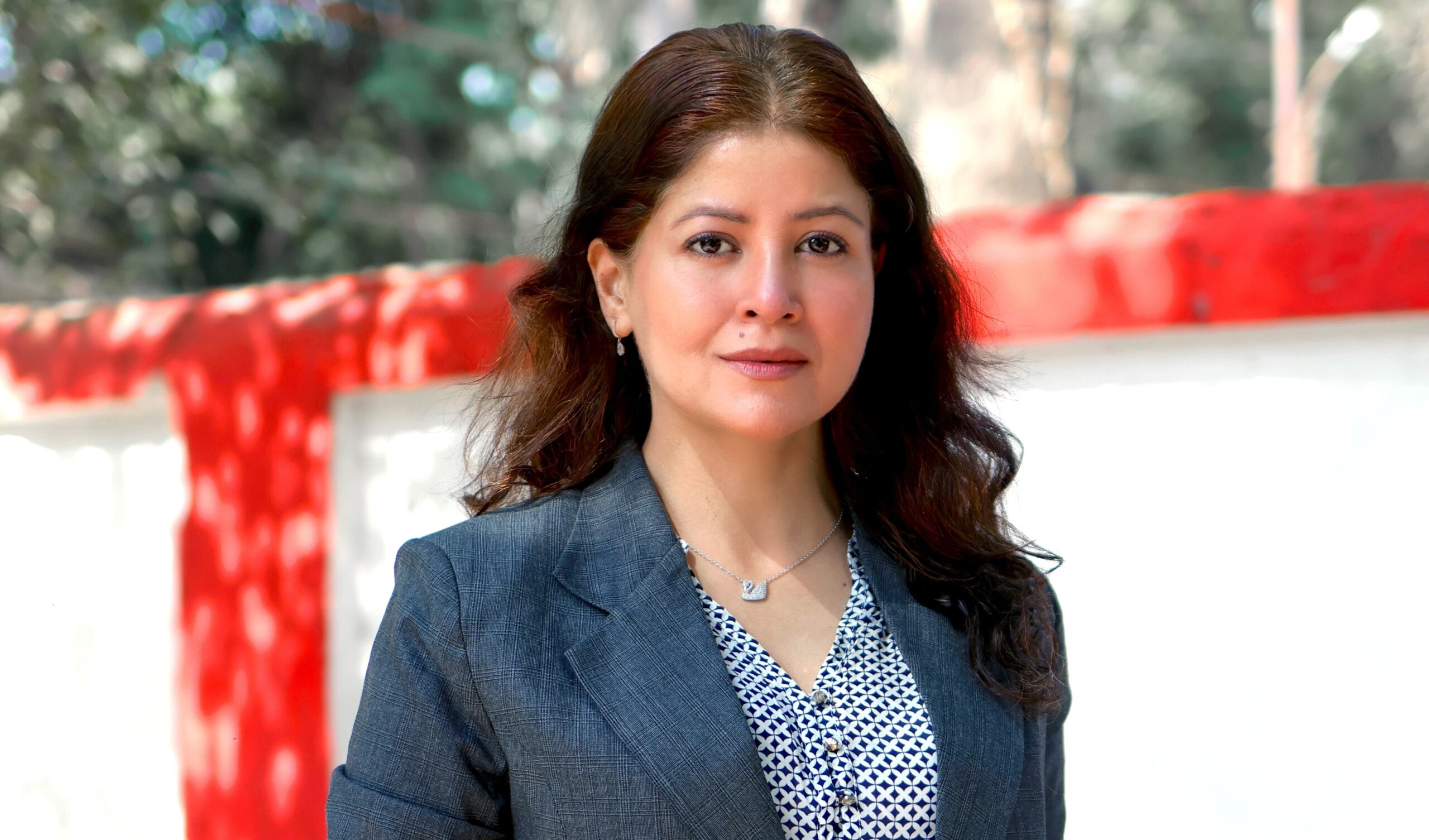
Simala Prasad is an IPS officer, writer, editor, and actress whose work exhibits a special fusion of literary, sociological understanding, public service, and socially conscious storytelling. During her student years, she explored her interest in acting by participating in theater whenever time allowed. She had the privilege of meeting filmmaker Zaigham Imam, who offered her a small role in the movie ‘Alif’ and now has done another movie, The Narmada Story, in a pivotal role. In an exclusive interview with Yogesh Mishra, she spoke about her childhood days, journey of becoming an IPS officer, working experience with her latest movie, future plans, and more.
How was your childhood? Tell us about your family background?
I had a simple childhood, yet one that was deeply structured and enriching in its own way. I grew up in an environment where discipline and creativity existed side by side. My father was a civil servant, an IAS officer, which meant that our lives were marked by frequent transfers. Moving from one place to another became a natural part of growing up, and with each new posting, I was exposed to different regions, cultures, and administrative systems. This gave me an early understanding of how governance functions on the ground and instilled in me a sense of adaptability. My mother, a distinguished Hindi writer and a recipient of the Padma Shri, introduced me to the world of literature. Through her, I had the opportunity to be part of literary gatherings and conversations, where ideas, stories, and perspectives flowed freely. This exposure nurtured a sensitivity towards human experiences and an appreciation for language and expression. In many ways, my upbringing was a balance between the rigor of public service and the depth of literary thought, shaping both my perspective and my personality.
Despite being an IPS officer, when did you first realize that you should try your luck in acting as well?
During my student years, I explored my interest in acting by participating in theatre whenever time allowed. However, it was only after joining the service that a real opportunity presented itself. I had the privilege of meeting Shri Zaigham Imam, who offered me a small role in movie ‘Alif’. That moment marked the beginning of my journey into acting, it all truly started from there.
How easy or tough was it to get a ticket to Bollywood?
My debut happened quite unexpectedly; it was more a matter of chance than design. I was fortunate to be offered an opportunity to work in a meaningful film, Alif, which addressed an important cause: the need to modernize madarsa education and to thoughtfully question the limitations of a narrowly confined religious learning system. In many ways, I believe it was simply a moment where circumstances aligned in my favor and luck played its part.
How were your working experience with director Zaigham Imam in “The Narmada Story”?
This is once again a reflection of meaningful cinema. It raises important questions and attempts to offer thoughtful, socially relevant answers. In this film, I portray the role of a sub-inspector, a character that allowed me to explore a different dimension of my personality. Working alongside seasoned and veteran actors made the entire experience deeply enriching; it was truly a valuable learning journey for me.

Which Bollywood movie or song touches your heart?
There are many films that have influenced me deeply, both as an actor and as an individual. However, if I had to choose one, it would be Shree 420. I believe the film was far ahead of its time, the questions it raised continue to remain relevant even today. What truly sets it apart is its seamless blend of strong social relevance with compelling entertainment. The performances were exceptional, and every aspect of the film reflected excellence. For me, it represents a complete package, thought-provoking, engaging, and artistically rich and it is a film I always look forward to watching again and again.
What do you do when feel low?
I find that music becomes the most soothing form of therapy. Listening to it feels almost like meditation, it calms the mind and brings a sense of inner balance. Along with music, reading has also been a constant companion for me. These two practices have helped me remain composed and navigate through difficult phases with greater strength and clarity.
Which three qualities about yourself do you find most appealing?
I believe three qualities in myself that I truly value are my resilience, my sense of empathy, and my commitment to meaningful work. Resilience helps me stay steady and move forward even in challenging situations. Empathy allows me to connect with people and understand their experiences beyond the surface. And my commitment ensures that whatever I take up, whether in service or creative expression, I approach it with sincerity and purpose.
What next after “The Narmada Story”?
I am eagerly looking forward to what lies ahead. I remain drawn to meaningful cinema, stories that not only engage but also contribute positively to society. Going forward, my focus will continue to be on projects that strive to inspire thought, bring about awareness, and, in their own way, help make the world a better place.
Any message for the readers of Bollywood Town magazine?
I would simply say this, remain sensitive, remain aware, and remain open to change. The world around us is constantly evolving, and each one of us has a role in shaping it. Meaningful change does not always come from grand actions; it often begins with small acts of understanding, empathy, and responsibility in our everyday lives. If we can learn to look beyond our own boundaries and truly listen, to people, to stories, and to realities different from our own, we can contribute to building a more compassionate and just society. And in that process, we not only change the world around us, but also grow as individuals.